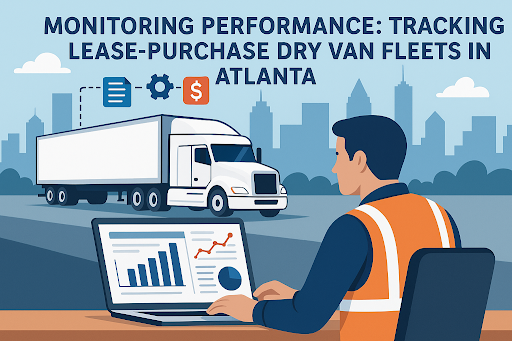
Adequate stable dry van work depends on the visibility of each part of the fleet conflux. Gears related to lease-purchase tracking in Atlanta for companies the dry van performance monitoring system is paramount. Fleet managers can use the right metrics, namely, from lease compliance to cost-per-mile, to basically make data decisions based on them which in turn leads to gains in productivity, cutback in costs, and also ensure a safe environment for drivers.
Essence of Lease-Purchase Tracking in the Capital City
The lease-purchase agreements are a perfect deal by which the owner-operators can easily attend to the logistics of the company. In the logistics network that spreads across the Atlanta area and has a mix of urban congestion and interstate access, it’s a must to have lease compliance. Tracking the payment dates, looking after the maintenance of the car, and following the mileage limitations are good rental terms that ensure the integrity of the airline that sells and also protect the driver.
A well-structured driver scorecard provides tracking individual performance versus leases terms. Key items are on-time payments, equipment health, and mileage limits’ adherence. Integration of lease data on daily operations enables the managers to picture accurately the level of their fleets fulfilling the agreed-upon terms thus minimizing disputes and unexpected costs.

Key Dry Van Performance Monitoring Metrics
While monitoring dry van performance, it is expedient to center on a few metrics that reflect actual performance as precisely as possible:
- Route Adherence: Since not all the drivers want driving pre-planned roads, this metric is of utmost importance here as the less idle time and avoiding detours will be a lower cost for the company.
- HOS Alerts: Measured traffic Hours of Service prevents the violation and accidents due to drivers’ fatigue.
- Asset Utilization: May be the most useful metric as it tracks the efficiency per trailer, cleaner insight into the effectiveness of the overall operation.
- Safety Incidents: Central as training and maintenance concern, this greatly helps them to know about accidents, near misses, and mechanical failures that may occur.
- Cost-per-Mile: This metric calculates the average of all driving possible expenses (fuel, tolls, lease rate) per mile.
These metrics will enable Atlanta carriers to find inefficiencies immediately. For instance, if the trailer is barely full the increase in asset utilization is probably because of the scheduled conflicts or inefficient routes. Or conversely, the spike in “HOS alerts” could reveal missing driver training or delays from bad routing that forces drivers to violate legal limits.
The Role of Technology: TMS Sync and Mobile Telemetry
These days, carriers risk their performance monitoring accuracy by not making it as timely as it should be, however, those who rely on the smart technology deal with the task efficiently. The TMS sync (Transportation Management System synchronization) is applied here; it connects the dispatch plans, route changes, and driver logs from back-office systems to mobile apps in a fluid way. In addition to that, mobile telemetry which tracks GPS positioning, speed and engine diagnostics in the same moment, managers can do the following:
- Renew the KPI dashboard automatically with new data
- Send immediate alerts if no log has been made by a trailer or if a HOS threshold is reached
- Get the report highlighting planned performance and the actual without the strain of the manual data entry
The same way for instance, even carriers as HMD Trucking utilize these tools to mend the broken line between dispatch, drivers, and maintenance teams — especially when managing regional dry van Cleveland jobs — as a result, not one critical metric gets lost amidst the tasks.

Creating an Effective KPI Dashboard
A consolidated KPI dashboard becomes the skeletal & nerve center for rudimentary interface lease-purchase tracking Atlanta operations. The top features include:
- Real-Time Alerts: Visual indicators for HOS violations, route deviations, or safety incidents
- High-Level Summaries: Daily and weekly snapshots of fleet lease metrics, enabling quick trend analysis
- Drill-Down Capability: A probe into the individual drivers’ driver scorecard entries or actual lease aircraft
- Custom Views: Region, route type, or trailer age filters to spot patterns
At the time you are arranging your dashboard, please pay special attention to the clarity of the setup. Group related metrics like route adherence and asset utilization and mark the performance with easy flags like (green/yellow/red).
Major Fleet Lease Metrics
Check the list shown below which contains the definitions of the key fleet lease metrics. This is a ready template out of which you can either include the table in a monthly report or embed it in a KPI dashboard for quick reference.
| Metric | Definition | Target |
| Lease Compliance | The ratio of lease terms met on time (payments, maintenance, mileage) | ≥ 95% |
| Route Adherence | The proportion of trips taken along planned routes is (trip ratio) | ≥ 90% |
| HOS Alerts | The number of Hours of Service violations per 1,000 driver-hours | ≤ 2 |
| Asset Utilization | The percentage of trailer capacity that is actually used | ≥ 85% |
| Cost-per-Mile | Total operating cost (fuel, lease, maintenance) divided by miles driven | ≤ $1.75 |
| Safety Incidents | Number of recordable incidents per 100,000 miles | ≤ 0.5 |
Actionable Guidelines for Lease Compliance and Route Adherence
- Automate Lease Reminders
Set up calendar notifications for the deadlines of looming milestones in the lease — payment due, scheduled maintenance, and lease‑end replies. Such a methodical approach on lease compliance will surpass the risks of unplanned costs and help in the period’s transition among the leases. - Incentivize On‑Time Routes
Penalties and upward rewards should be defined strictly within the framework of driver scorecard metrics. However, it is beyond doubt that awarding the drivers who always meet the required route adherence, idle times, and informing about detours is the right way to keep the driver staff engaged and motivated. - Standardize Pre‑Trip Inspections
Simply embed digital checklists into your mobile apps that list all critical lease terms which must be completed on every pre-trip inspection covering issues such as tire tread depth, brake wear, and overall trailer condition before departures.
Preventing Safety Incidents with HOS Alerts
It is imperative to prioritize safety in any fleet. HOS alerts do not just assist in enforcing the law but they also serve the purpose of pointing outside-bounds fatigue risks. The best practices include:
- Notification of Tiers: At 80% of the allowed time driving, there is a warning, then stricter driving announcements approach.
- Mandatory Break Tracking: Break periods off duty must be recorded automatically with locks to logging that disallow it during breaks.
- Incident Analysis: After safety any accident, it is a must to Review the driver scorecard alongside route data to draw the lines whether it was short time-spans or added unforeseen delays.
By doing HOS data together with mobile telemetry, Sufficient and timely actions are taken by the manager who can then interfere, reroute drivers, or change schedules to ensure safety while reducing downtime.
Tuning in Cost‑Per‑Mile and Asset Utilization
A critical index of profitability, cost-per-mile is what drives the decisions made about optimizing fuel efficiency, lease terms, and maintenance. To do this, it is wise to use the metric in such a way:
- Fuel Management Programs: Utilize route data to direct drivers to less congested routes thus minimizing fuel burn.
- Scheduled Maintenance Sync: Reduce revenue loss by aligning maintenance tasks with slow-traffic periods.
- Dynamic Loading: Use your TMS to balance payload by adjusting load assignments, thereby maximizing asset utilization without breaching axle limits.
Keeping track of these improvements through your KPI dashboard on a weekly basis will help you to find out which strategies generate the most savings.
Summary
In a cutthroat Atlanta business environment, running a lease-purchase tracking Atlanta effectively and simultaneously the dry van performance monitoring is not linearly-mandatory-but it is the only strategic option. By giving all the attention to the top fleet lease metrics, utilizing TMS sync, along with mobile telemetry and clarity in a simple KPI dashboard, the carriers will be able to boost lease compliance, increase cost-per-mile control, and achieve better route adherence. Accompanying the execution of these practices, you will observe the real impacts and the consequent improvements in security, efficiency, and profitability — as the saying goes — one mile at a time.